
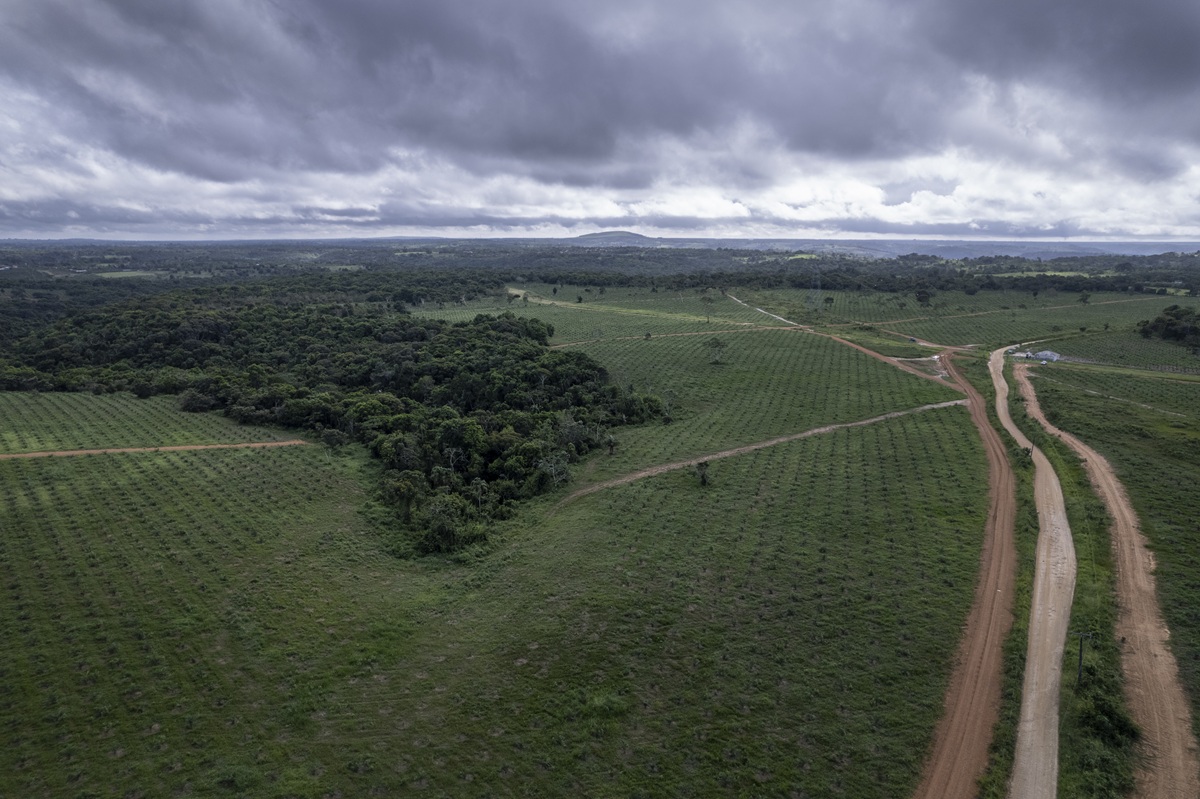
FROM CACHOEIRA AND SÃO FRANCISCO DO CONDE (BAHIA) — The cultivation of macaúba palm in Bahia’s Recôncavo region (Brazil) by the energy company Acelen, for the production of renewable diesel and “green” aviation fuel, has been damaging nearby roads and limiting access to extractive areas previously used by surrounding quilombola communities, local residents say.
Through a consortium led by HSBC and the IFC (International Finance Corporation, the World Bank’s investment arm), Acelen—controlled by Mubadala Capital, a sovereign wealth fund from the United Arab Emirates—secured BRL 7 billion in public and private financing to build a biorefinery in the region where macaúba will be processed.
Ten other national and international financial institutions are participating in the partnership, including BNDES and Bradesco. The company states that it has already sold 90% of its future production to the United States and Europe.
Acelen’s macaúba palm monoculture in Cachoeira, a city in Bahia’s Recôncavo region. Residents living near the plantation fear impacts on roads and on the traditional extractive activities of quilombola communities. (Photo: Fernando Martinho/Repórter Brasil)Acelen’s macaúba palm monoculture in Cachoeira, a city in Bahia’s Recôncavo region. Residents living near the plantation fear impacts on roads and on the traditional extractive activities of quilombola communities. (Photo: Fernando Martinho/Repórter Brasil)
However, the Brazilian Federal Public Prosecutor’s Office has opened two investigations to determine whether the process of prior consultation with communities potentially affected by the project is being carried out in accordance with ILO Convention 169 (International Labour Organization), a treaty ratified by Brazil that protects the rights of Indigenous and traditional communities.Speaking to Repórter Brasil, which visited the region, quilombola residents complained about restrictions allegedly imposed by the company on access to places historically used for religious practices and food gathering. They also reported damage to local roads caused by the constant movement of trucks and tractors.
Ananias Viana, a representative of the Kaonge quilombola community, explains that before Acelen arrived, quilombolas freely collected fruits and vin